
Whole-System Approach Managing Grazing to Restore Soil Health and Farm Livelihoods

This paper is a literature review on the ecological impacts of grazing, and finds that where managed properly (employing a “whole-systems approach” and “adaptive, goal-directed grazing methods”) livestock are essential to ecosystem service sustainability and improvement. Soil organic matter increases were sufficient to yield a net sink of 2 tons of carbon per hectare per year.
Climate change mitigation as a co-benefit of regenerative ranching: Insights from Australia and the United States
This paper argues that the infusion of holistic decision making into the practice of planned grazing, or “regenerative ranching,” results in a suite of ecological, economic and social benefits that are the main factors keeping adherents on the regenerative path. Climate change mitigation is only a ‘co-benefit’ or after-thought. The use of holistic decision-making in the implementation of managed grazing amplifies its effects and increases regenerative potential, and, by extension, climate change mitigation potential.
Transformational adaptation on the farm: Processes of change and persistence in transitions to ‘climate-smart’ regenerative agriculture
This paper analyzes the experiences of farmers in Australia who have undertaken and sustained transitions from conventional to regenerative agriculture, the majority of whom are Holistic Management practitioners. The authors conclude that transitioning to regenerative agriculture involves more than a suite of ‘climate-smart’ mitigation and adaptation practices. Rather, it involves subjective, nonmaterial factors associated with culture, values, ethics, identity, and emotion that operate at individual, household, and community scales and interact with regional, national and global processes.
A half-century of Holistic Management: what does the evidence reveal?
This comprehensive literature review describes the main tenets of HM and addresses the longstanding and unresolved controversy over its legitimacy. It additionally provides a meta-analysis that not only provides an up-to-date review of the multidisciplinary evidence and ongoing arguments about HM, but also provides a novel explanation for the controversy.
Impacts of holistic planned grazing with bison compared to continuous grazing with cattle in South Dakota shortgrass prairie
Paper assesses Holistic Planned Grazing outcomes in shortgrass prairie of the Northern Great Plains of North America. Researchers compared key ecosystem functions on the ranch of long time Holistic Management practitioner Mimi Hillenbrand who grazes bison, with those on neighboring cattle ranches using set stocked light continuous (LCG) and heavy continuous grazing (HCG).
Ecological Health Index study published by MSU & Ovis 21
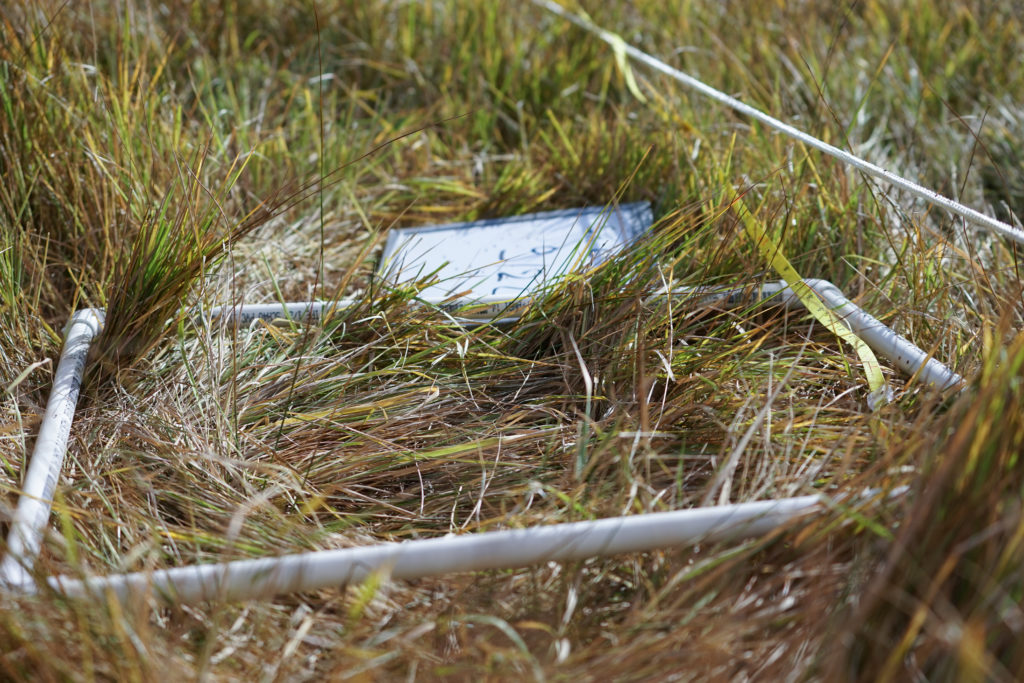
Peer-reviewed study demonstrates the efficacy of the Ecological Health Index––a component of the Ecological Outcome Verification protocol––for quickly and affordably measuring grazing land function.
Carbon Footprint Evaluation of Regenerative Grazing at White Oak Pastures

Lifecycle analysis on White Oak Pastures’ beef. Results demonstrated that a pound of protein sequestered 3.5 pounds of CO2, in comparison to conventional beef which emitted 33 pounds of CO2 per pound of protein, or even Impossible Burger or Beyond Meat which emitted 3.5 pounds and 2 pounds of CO2 per pound of protein, respectively.
Effects of holistic grazing management on milk production, weight gain, and visitation to grazing areas by livestock and wildlife in Laikipia County, Kenya
This paper studied the effects of holistic planned grazing on milk production, weight gain, and visitation to grazing areas by livestock and wildlife in Laikipia County, Kenya. Results found that, with significantly higher numbers of grazing animals, the number of wildlife more than doubled, average milk yields increased, and animal weight gain nearly doubled compared to traditional grazing areas.
Deficiencies in the Briske et al. Rebuttal of the Savory Method
In this paper, Dr. Richard Teague examines the shortcomings and inaccuracies of his colleague Dr. David Briske’s claims against Allan Savory’s methods.
Profile of good stewardship: the Rafter F Cattle Company (2001)

This case study of a ranch in New Mexico, USA by the Quivira Coalition features Rafter F Ranch—a 4,779-hectare property in San Jon, New Mexico. Net income per acre grew from $5.84 in 1984 to $22.5 in 1992.