
Holistic Management Shifts Ranchers’ Mental Models for Successful Adaptive Grazing

This study explores how Holistic Management transforms the way ranchers think and make decisions—shifting them from control-based approaches to regenerative mindsets grounded in values, systems thinking, and ecological feedback.
Amping up soil carbon: soil carbon stocks in California rangelands under adaptive multi-paddock and conventional grazing management
This study measured soil carbon across 64 California ranches and found that AMP-grazed pastures held 13–29% more soil carbon than conventionally grazed ones. The gains extended deep into the soil profile, highlighting AMP grazing’s strong potential for long-term carbon storage and climate impact.
Ganado o Desierto (2023)
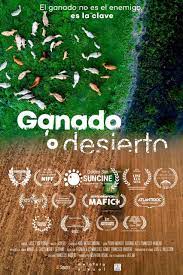
The fight to reverse climate change is putting animals in the crosshairs. The purpose of this documentary is focused on showing the use of livestock for the regeneration of pastures, soils, trees and water. Good livestock management shows itself in a real way as a solution for the restoration of ecosystems and rural economies.
Grass and ground dwelling beetle community responses to holistic and wildlife grazing management using a cross-fence comparison in Western Kalahari rangeland, Namibia

Researchers compared the impact of Holistic Management to wildlife grazing on grass and ground-dwelling beetle species diversity on neighboring farms in Namibian rangeland, finding the holistically managed livestock operation demonstrated greater species richness and biodiversity for both vegetation and beetle populations.
To Which We Belong (2021)
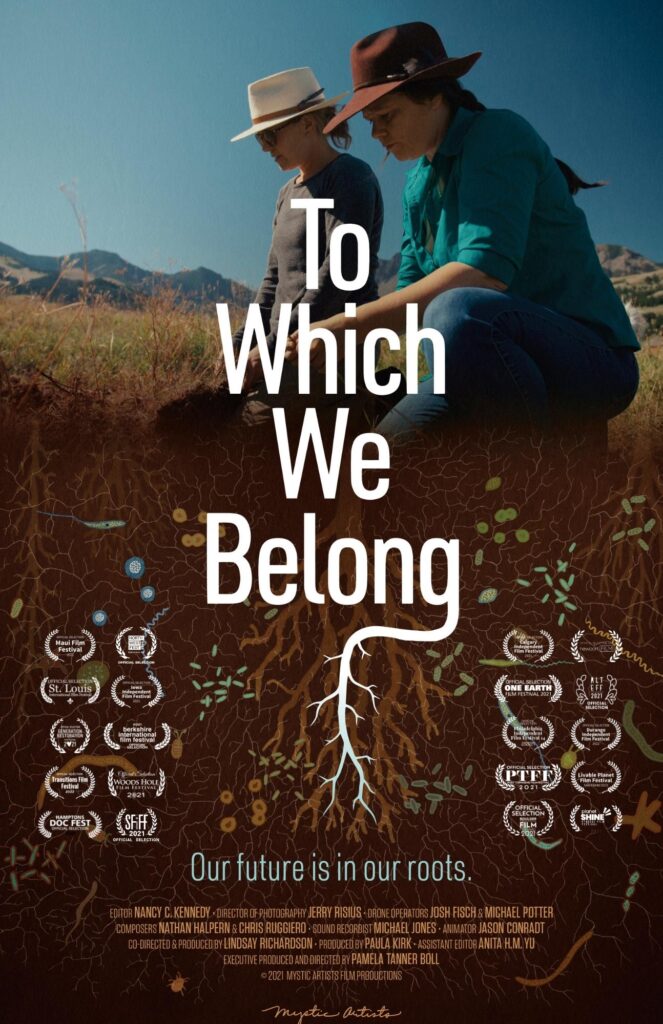
To Which We Belong’ is a documentary that highlights farmers and ranchers leaving behind conventional practices that are no longer profitable or sustainable. These unsung heroes are improving the health of our soil and sea to save their livelihoods — and our planet.
Sacred Cow (2021)
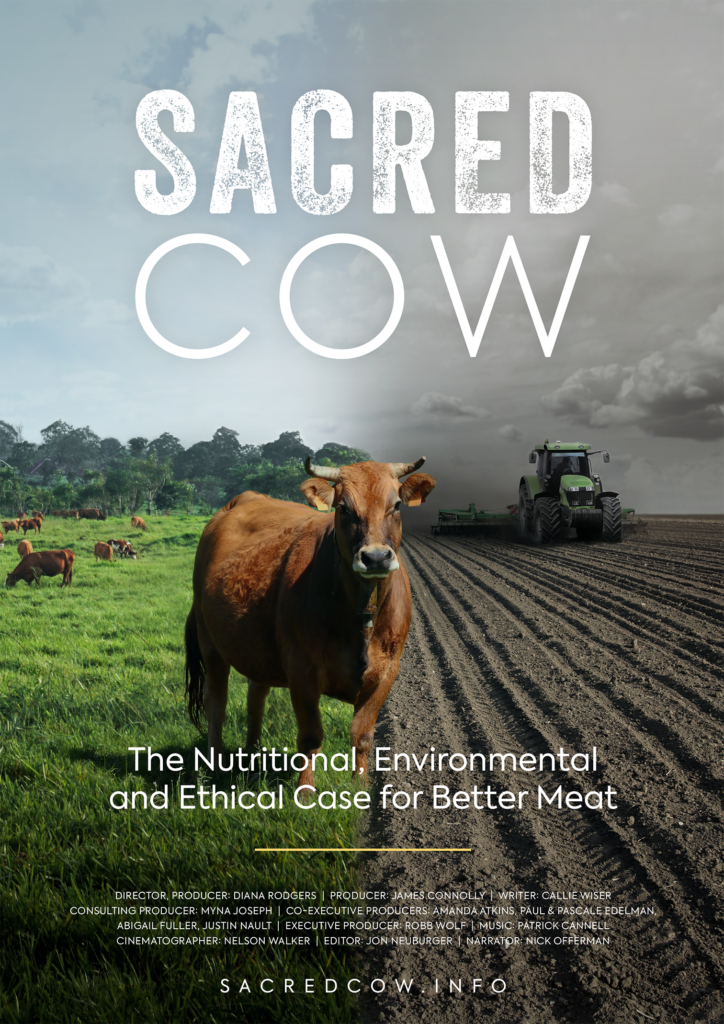
In Sacred Cow, registered dietitian Diana Rodgers and former research biochemist and New York Times bestselling author Robb Wolf explore the quandaries we face in raising and eating animals—focusing on the largest (and most maligned) of farmed animals, the cow. Taking a critical look at the assumptions and misinformation about meat, Sacred Cow points out the flaws in our current food system and in the proposed “solutions.”
Ecosystem Impacts and Productive Capacity of a Multi-Species Pastured Livestock System
This paper conducted a whole-farm life cycle assessment (LCA) of a multi-species pasture rotation (MSPR) farm in the southeastern United States that was originally converted from degraded cropland. Results showed an average of 2.29 Mg C ha−1 yr−1. Incorporation of soil C sequestration into the LCA reduced net GHG emissions by 80%, resulting in a footprint 66% lower than commodity production systems.
Kiss the Ground (2020)
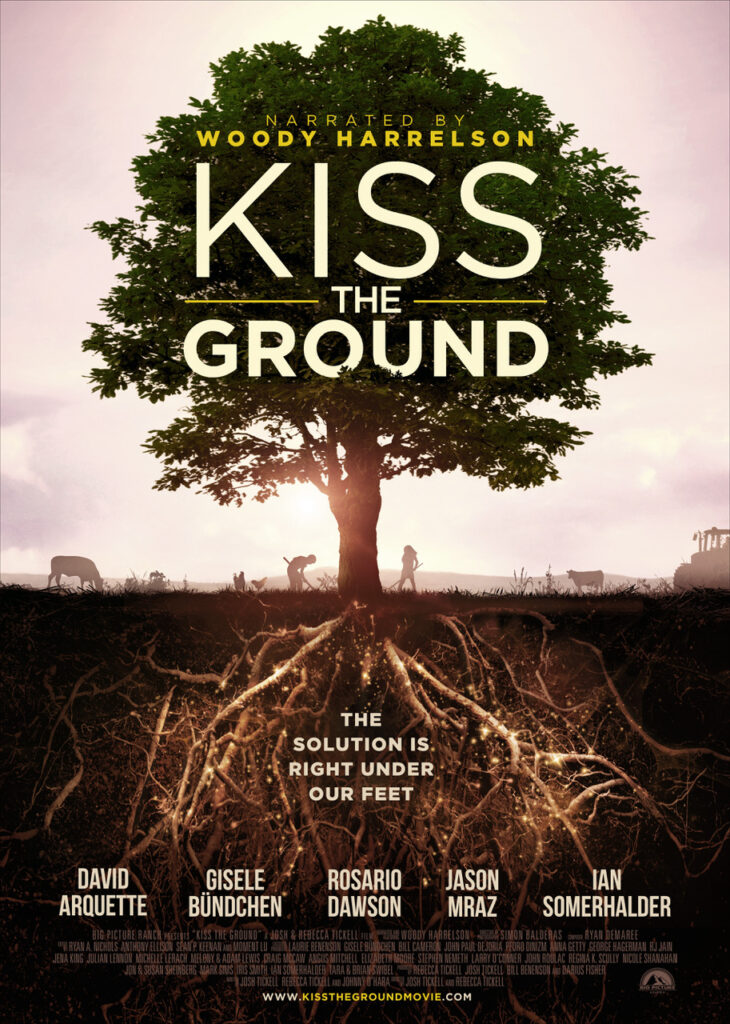
In conjunction with the book of the same name, Kiss the Ground is an accesible call-to-action for those looking to align their values with their purchasing behavior. Featuring Allan Savory and other pioneers, the film takes a deep dive into the world of regenerative agriculture from the perspective of the everyday consumer.
Holistic Management and Adaptive Grazing: A Trainers’ View
The authors avoid the usual debates on whether or not Holistic Management, Holistic Planned Grazing, or any its many derivatives deliver outcomes as claimed by practitioners, and instead focuses on their contribution to managing complexity. Holistic Management’s biggest acknowledged contribution to the grazing world is (arguably) its emphasis on adaptivity, strategic decision-making, goal-setting, and ability to manage complexity. Based on data gathered from educators in American and Canada who have trained many farmers and ranchers, the authors conclude that Holistic Management represents systems thinking in practice.
The Effect of Holistic Planned Grazing on African Rangelands: A Case Study from Zimbabwe
South Africa’s Agricultural Research Council completed this study over a 6-year period comparing the Africa Centre for Holistic Management’s land at Dimbangombe under Holistic Planned Grazing (HGP), to nearby communal areas where HPG was not practiced. The researchers concluded that HPG yields positive long-term effects on ecosystem services (soils and vegetation) and points to the HPG approach enhancing the sustainability of livestock and wildlife in this environment.