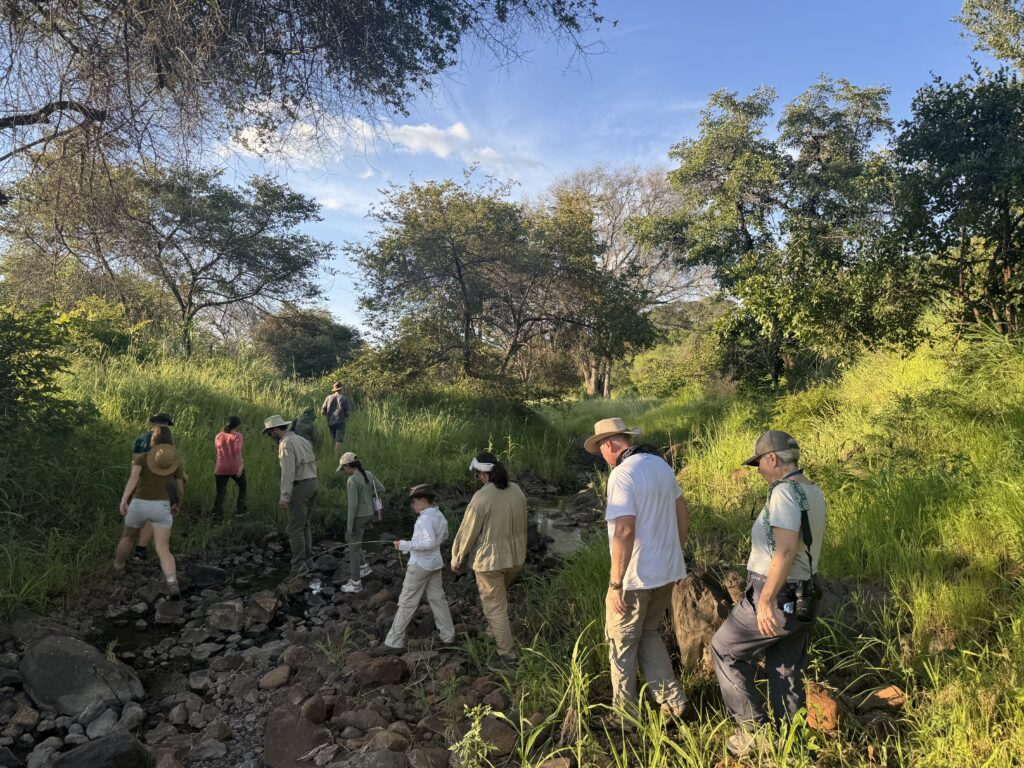
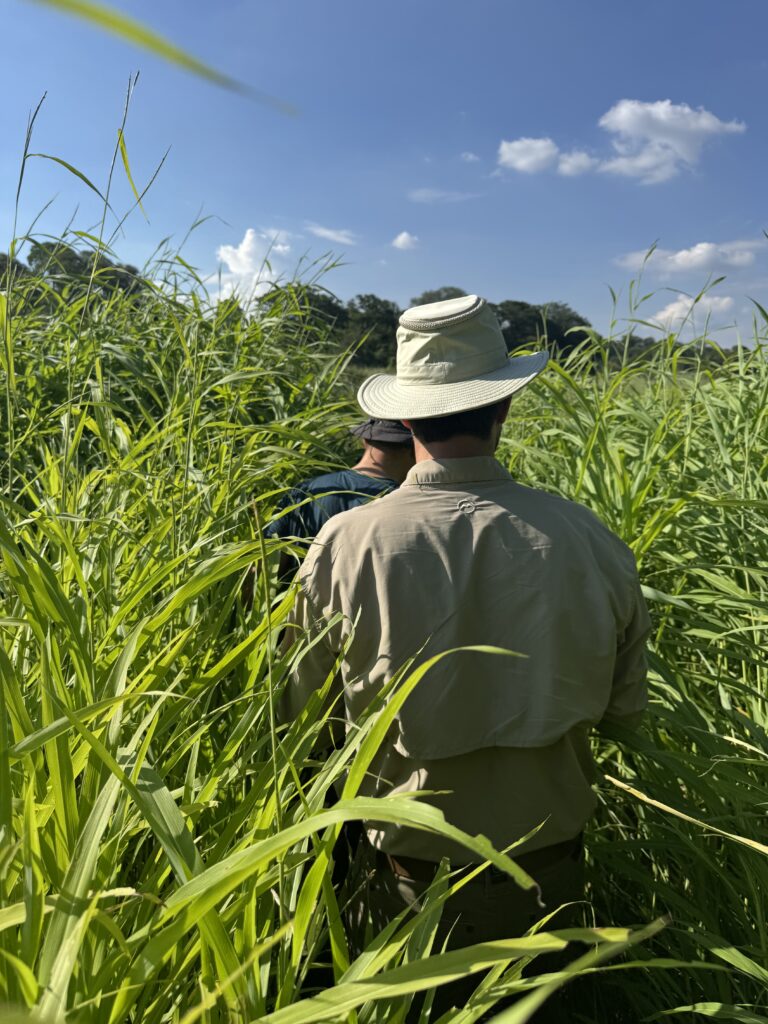
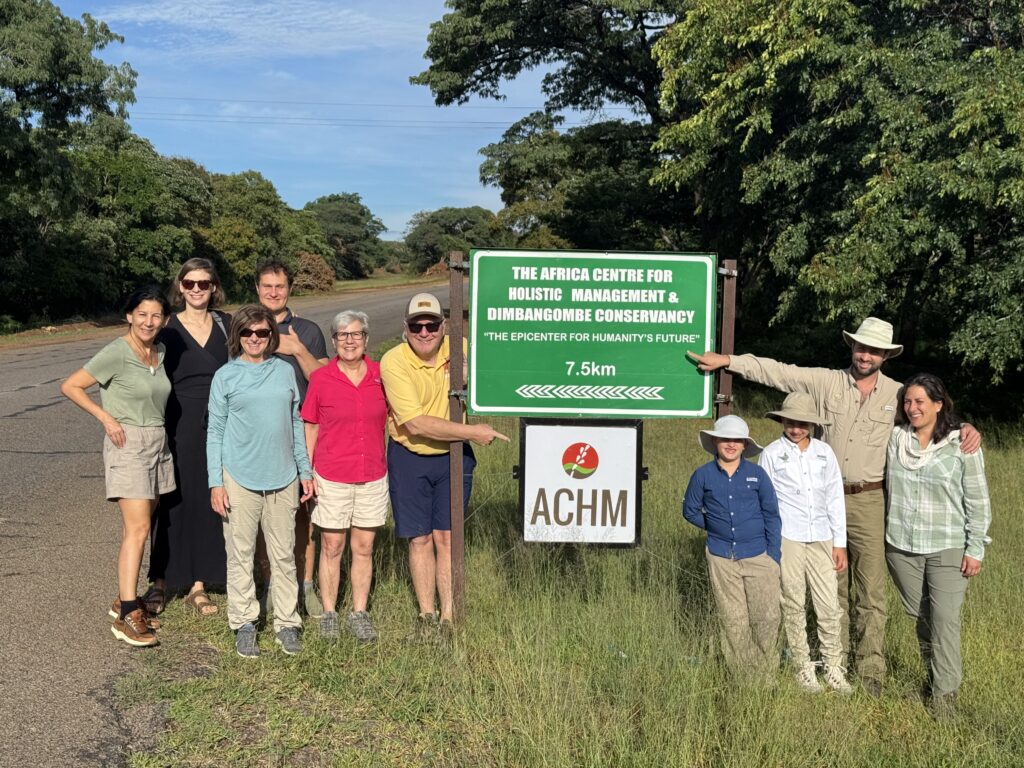
This month’s Savory Journey to Dimbangombe offered participants truly immersed connections and an unforgettable blend of wildlife encounters, community engagement, and insight into holistic management practices in southcentral Africa. Hosted by the Africa Centre for Holistic Management (ACHM) at Dimbangombe Conservancy near Victoria Falls, Zimbabwe, the journey brought theory and practice into vivid, real-world experience on the land and within the community.
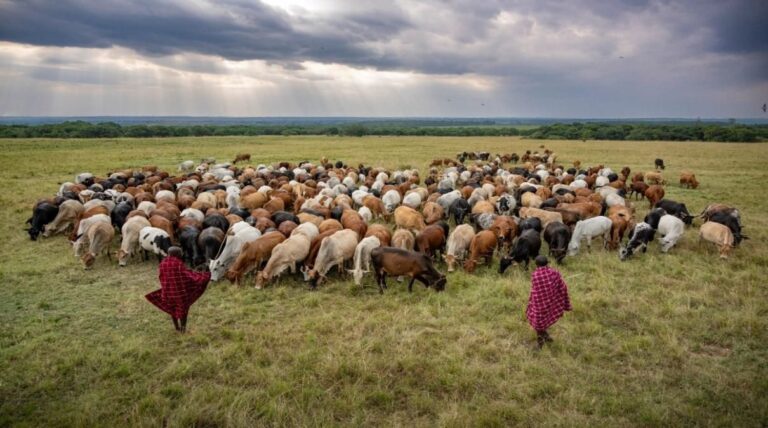
From the moment travelers arrived, the rhythm of the African bush was a part of everyday life. From incredible lion encounters on the ranch, helping herders move the cattle herd into their protective night bomas, and challenges with power outages, guests witnessed and experienced the successes and challenges of life on Dimbangombe. These encounters were not just thrilling but framed within a deeper appreciation for the ecosystems and communities that are affected by, and support them.
One of many highlights was exploring how holistic management at ACHM contrasts with traditional park conservation models. At Dimbangombe, livestock—cattle, sheep, and goats—are managed with wildlife in a holistic planned grazing approach that continues to regenerate soil, improve water cycles, and support abundant forage and habitat health. Participants saw firsthand how rain is captured in well covered soils, rivers are flowing, grasses are robust, and wildlife thrives alongside managed herds of livestock – and the challenges that go with that.
In contrast, time spent on a full-day wildlife safari in Chobe National Park, Botswana, offered a reflection on more conventional park and land management. National parks like Chobe are focused on protecting populations of wildlife within fixed protected areas under government conservation frameworks and tourism management, yet they face challenges, including huge amounts of landscape degradation, that differ from the practices at ACHM that integrate social, economic and environmental considerations into all aspects of their management and decision making.
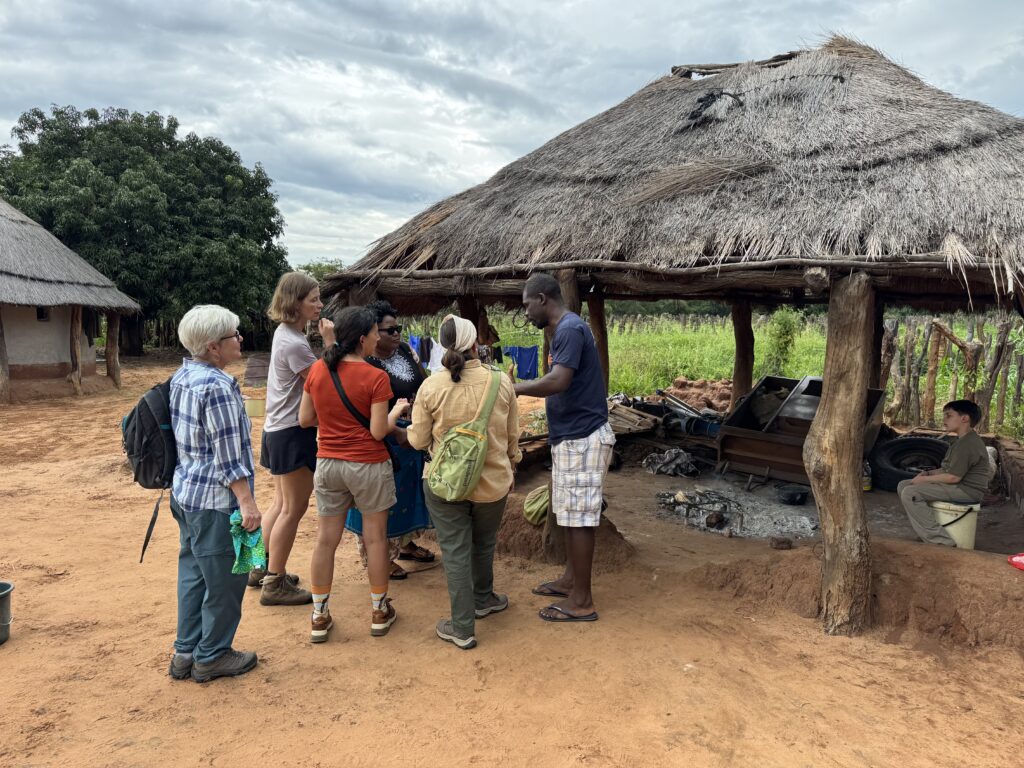
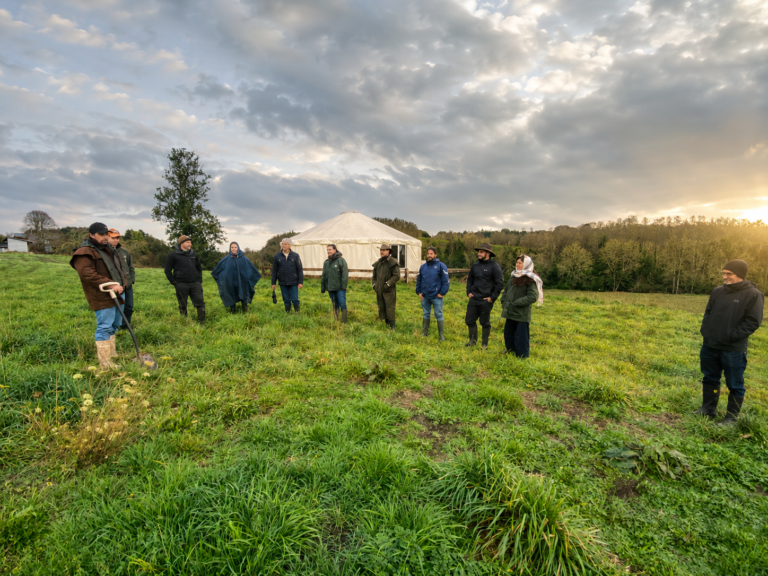
Directly connected to ecological discovery, guests spent time with the local Ndlovu community working with ACHM and the iGugu Trust. The group spent time on the land with community leaders and shared meals and stories that deepened their understanding of how land regeneration supports human and natural systems as one integrated and coevolved system. Visits to community-managed lands showcased inspiring increases in forage, water capture, and thriving livestock and community.
This January trip wasn’t just a journey through stunning landscapes; it was a transformative experience in understanding how people, livestock, and wildlife can coexist to restore degraded lands and enrich lives. Visit this link for more information on upcoming Savory Journeys.